

 By
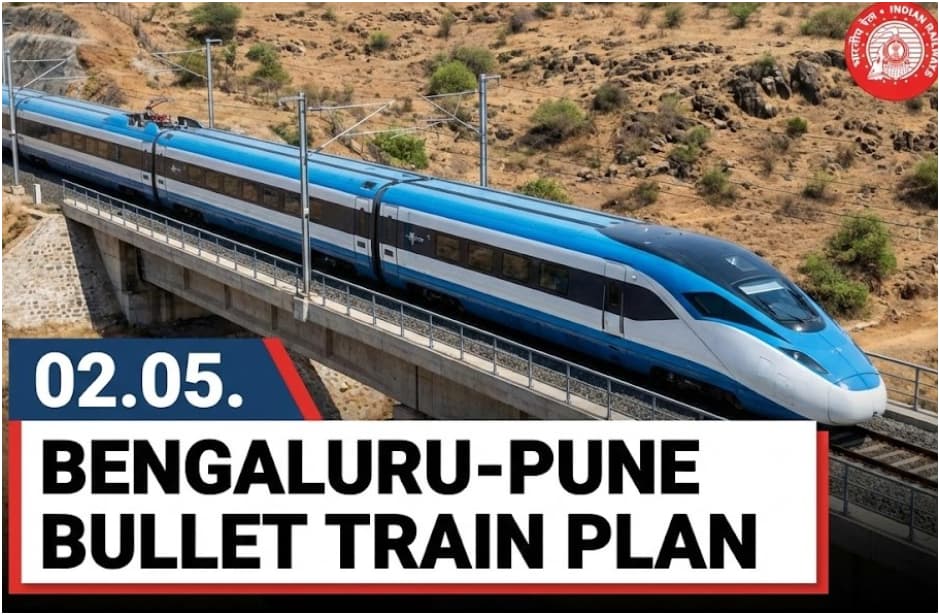
By The dream of a high-speed rail network connecting the major technology and manufacturing hubs of Bengaluru and Pune has taken a massive step forward this February 2026. Following the announcement of the Union Budget, where several high-speed rail corridors were proposed, senior leaders from Karnataka have successfully pushed for the inclusion of a dedicated link between Bengaluru and Pune. Union Railway Minister Ashwini Vaishnaw has responded positively to this proposal, sparking a wave of excitement across the region. This project is not just about connecting two big cities but is being hailed as a life-changing development for the districts of North and Central Karnataka.
For many years, the people of North Karnataka have asked for better and faster ways to travel to the state capital and neighbouring Maharashtra. This new high-speed rail corridor is expected to be a game-changer for several important districts, including Belagavi, Hubballi, Haveri, Davangere, Chitradurga and Tumakuru. Currently, travelling from these areas to Bengaluru or Pune can take many hours by bus or regular train. The bullet train will bridge the gap, bringing the northern parts of the state closer to the economic heart of the south. This means that a student in Belagavi or a businessman in Hubballi could potentially reach Bengaluru in a fraction of the time it takes today.

The primary goal of this corridor is to link the “Silicon Valley of India,” Bengaluru, with Pune, which is a major center for the automobile industry, information technology, and higher education. By creating a fast and reliable link, the government hopes to encourage more companies to set up offices in North Karnataka. When travel is quick, big businesses are more likely to invest in smaller cities because they know their employees and goods can move easily. This will create thousands of new jobs for local youth and help prevent fatigue, where talented people leave their hometowns to find work in big metros. Similarly, students will have better access to top universities in both cities, making it easier to commute for exams or special courses.
Like the other high-speed corridors announced in the budget, the Bengaluru-Pune line is designed for incredible performance. These trains are expected to run at a maximum speed of 350 kilometers per hour, with a steady operational speed of around 320 kilometers per hour. To achieve these speeds safely, the tracks will be built on elevated corridors, which means they will be raised above the ground on pillars. This design is very important because it prevents people, animals, or vehicles from crossing the tracks, which is a major cause of delays and accidents on regular railway lines. It also means that very little farmland will be disturbed, as the pillars take up much less space than a traditional ground-level track.
This proposal fits perfectly into India’s larger vision of a “High-Speed Rail Diamond.” The government has already started working on plans to connect Bengaluru with Chennai and Hyderabad. By adding the Pune link, Bengaluru becomes a central hub that connects the south of India to the west. This integrated network will allow a passenger to travel from Chennai to Pune via Bengaluru with ease. It effectively creates a continuous backbone of high-speed travel that will transform how millions of Indians move across the country.Union Minister Pralhad Joshi, who spearheaded the proposal, noted that this link is essential for the holistic development of the entire western industrial belt.
Apart from speed and convenience, the bullet train is a win for the environment. High-speed rail is much more sustainable than driving or flying because it runs entirely on electricity and can carry a large number of passengers at once. As India works toward its climate goals, projects like this help reduce the number of cars on the highways and planes in the sky, leading to lower carbon emissions. While the project is still in its early stages and requires detailed surveys and land planning, the official “thumbs-up” from the Railway Ministry has provided the momentum needed to turn this ambitious plan into a reality.
The proposed Bengaluru-Pune high-speed rail corridor has gained momentum after Union Budget 2026, with Railway Minister Ashwini Vaishnaw responding positively. Designed for speeds up to 350 kmph, the project aims to boost connectivity across North Karnataka districts like Belagavi and Hubballi. The corridor will strengthen industrial growth, reduce travel time, and support India’s expanding high-speed rail network vision.