


 By
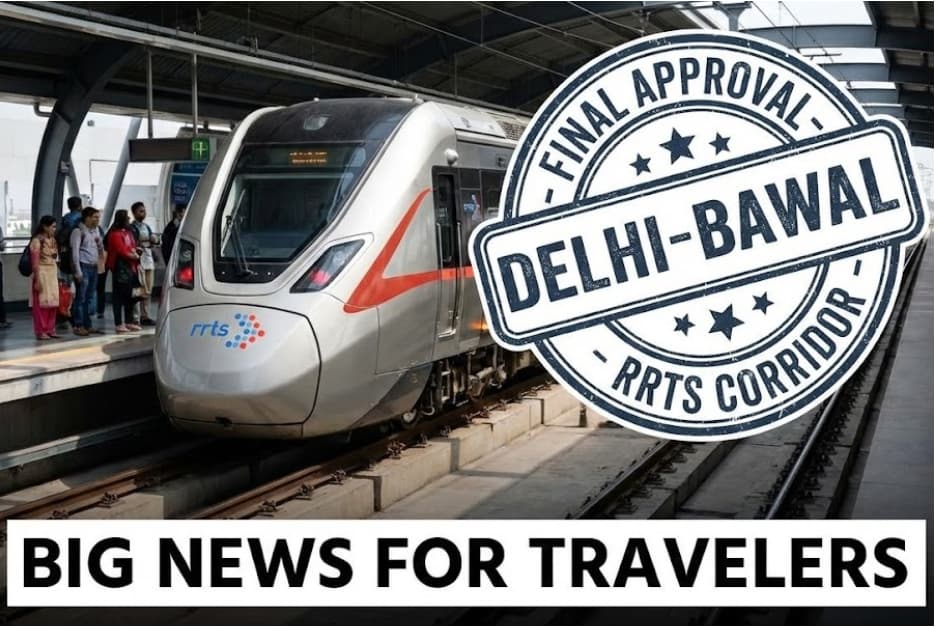
By NEW DELHI — In a major move to make travel faster and easier for thousands of people, the Union Ministry of Housing and Urban Affairs (MoHUA) has officially approved the Delhi-Bawal RRTS Corridor. This project is part of a high-speed rail system called the Regional Rapid Transit System (RRTS), which aims to connect Delhi with its neighboring cities in a very short time.
Initially, there was a plan to build the track only up to Dharuhera in Gurugram. However, after careful study and requests from the Haryana government, the project has been extended. The final plan now confirms that the high-speed trains will run all the way from Sarai Kale Khan in Delhi to Bawal in Haryana.
A Gift for Daily Commuters
For people living in Gurugram, Dharuhera, and Bawal, this news is a huge relief. Currently, traveling between Delhi and these industrial areas can take several hours due to heavy road traffic. The new RRTS corridor, often referred to as “Namo Bharat,” will allow trains to travel at semi-high speeds.
This means a journey that used to take three hours by bus or car could soon be completed in less than half that time. The trains are designed to be modern, comfortable, and very fast, making them a great choice for office-goers and students.

Project Phases: What to Expect
According to a letter from Union Minister Manohar Lal Khattar, the project will be completed in stages:
Phase One (Delhi to Bawal): This is the section that has just received the green light. It starts at the Sarai Kale Khan station in Delhi—which is becoming a massive travel hub—and goes through Gurugram to reach Bawal in Haryana.
Phase Two (Beyond Bawal): Once the first part is working well, the government plans to extend the line from Bawal to Behror in Rajasthan. Eventually, the goal is to take this high-speed line all the way to Alwar.
Why Is This Project Important?
This corridor is not just about moving people, it is about growing the economy. Bawal and Dharuhera are major industrial hubs with many factories and businesses. By connecting them to Delhi with a fast train, it becomes easier for businesses to grow and for workers to reach their jobs safely.
Furthermore, the RRTS system helps the environment. When more people choose to travel by fast electric trains instead of using private cars or diesel buses, there is less pollution and less traffic on the busy Delhi-Jaipur highway.
The Role of the Haryana Government
The Haryana government played a very important role in making this happen. They approved the plan last year and sent a strong proposal to the Central Government. They argued that stopping at Dharuhera wouldn’t be enough and that extending it to Bawal would benefit many more people. The Union Ministry agreed, leading to the official approval we see today.
What Happens Next?
Now that the approval is in place, the next steps will involve finalising the technical designs and starting the construction work. While building a high-speed rail line takes time, the approval is the most important first hurdle crossed.
The RRTS stations will be modern and linked with other types of transport. For example, the starting point at Sarai Kale Khan is already connected to the Delhi Metro and the Inter-State Bus Terminus (ISBT). This means you can hop off a local metro and straight onto a Namo Bharat train to Bawal without any hassle.
The Union Ministry of Housing and Urban Affairs has approved the Delhi–Bawal RRTS Corridor, extending the semi-high-speed line from Sarai Kale Khan to Bawal in Haryana. Part of the Namo Bharat network, the project aims to cut travel time, ease highway congestion, and boost connectivity to key industrial hubs like Gurugram and Dharuhera. Future phases may extend the corridor to Behror and Alwar.