

 By
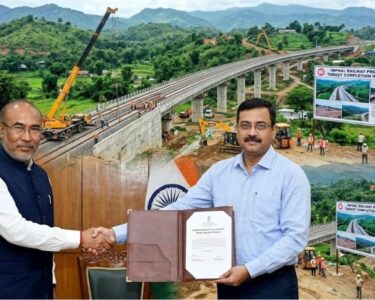
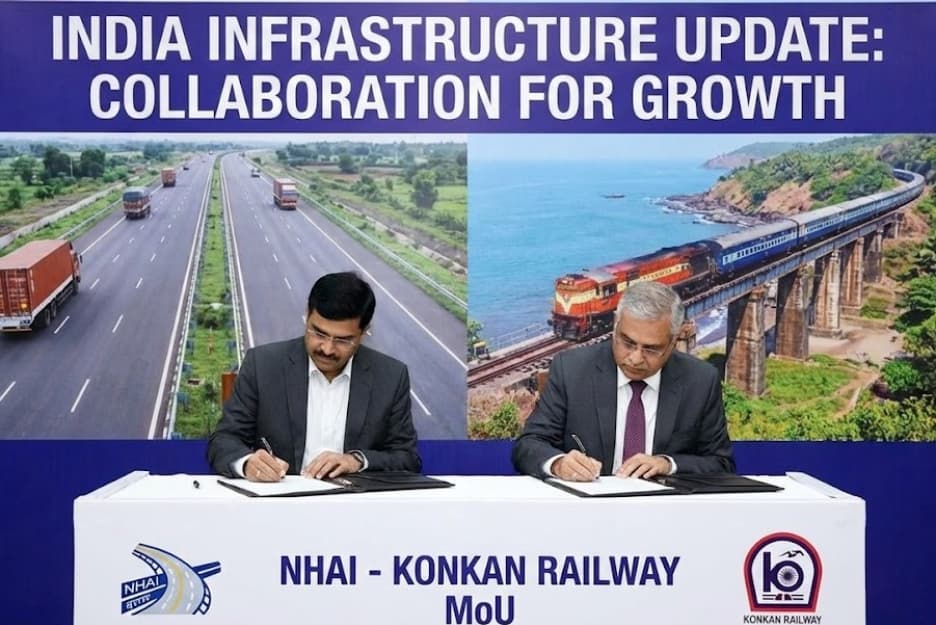
By NEW DELHI — The National Highways Authority of India (NHAI) and Konkani Railway Corporation (KRCL), have signed a Memorandum of Understanding (MoU) to strengthen infrastructure development across India. The formal signing ceremony for this Memorandum of Understanding (MoU) took place on January 21, 2026, at the NHAI Headquarters in New Delhi, where NHAI Chairman Shri Santosh Kumar Yadav and senior officials from both organizations established a five-year agreement to cooperate on resource optimization and the planning of integrated national highway and rail infrastructure.
For a very long time, Infrastructure development for road and rail projects in India were often planned and executed separately. This led to delay, higher development costs, or missed opportunities for better connectivity. By signing this Memorandum of Understanding (MoU), the NHAI and KCRL are committing to a Whole-of-Government approach. This means they will share data, expertise, and land to ensure that every rupee spent on infrastructure development provides the maximum benefits to the public.
One of the most exciting parts of this partnership is how it addresses challenges of India’s geography. Konkan Railway is known for its incredible engineering feats who managed to build a railway line through the Western Ghats, a region filled with soft soil, heavy rainfall and steep mountains. NHAI on the other hand, is the master of building vast highway networks that cross the entire country.
By working together, NHAI can now tap into Konkan Railway’s deep knowledge of tunnels and bridges. When the government decides to build a highway through a mountain range, Konkan Railway can provide technical support, check designs, and even perform safety audits. This is especially important for preventing landslides. In hilly areas, keeping roads and tracks safe from falling rocks is a constant battle, and this partnership makes that battle much easier to win.
The partnership isn’t limited to just construction; it also focuses on the future of business and trade. One of the main goals is to develop Multi-Modal Logistics Parks (MMLPs) and Inter-modal Hubs. Imagine a massive center where a truck can pull up, and its cargo can be quickly shifted onto a train, or vice versa. These hubs act like “ports on land,” making the movement of goods much faster and cheaper.
The two organizations are also planning to invest in the future of their workers and the materials they use. The MoU includes a plan for joint research and development into new construction materials that are stronger and more environmentally friendly. They will also look into common utility corridors, which are designated paths where pipes, internet cables, and electricity lines can run safely alongside transport routes without interfering with them.
This agreement is a practical shift in how India approaches growth. It treats infrastructure as a single, living system rather than a collection of separate parts. As the five-year term progresses, we can expect to see more bridges that carry both cars and trains, more efficient warehouses, and a transport network that is resilient enough to handle any weather or terrain.
In simple terms, this partnership between the NHAI and Konkan Railway is a win for everyone. It means safer travel for passengers, lower costs for businesses, and a more modern infrastructure for the entire nation.
NHAI and Konkan Railway Corporation Limited signed a five-year MoU to enhance integrated road and rail infrastructure planning. The partnership focuses on resource optimization, tunnel and bridge expertise, multi-modal logistics parks, and joint research in sustainable construction. The collaboration aims to reduce costs, improve connectivity, and strengthen India’s transport network through coordinated highway and railway development.