


 By
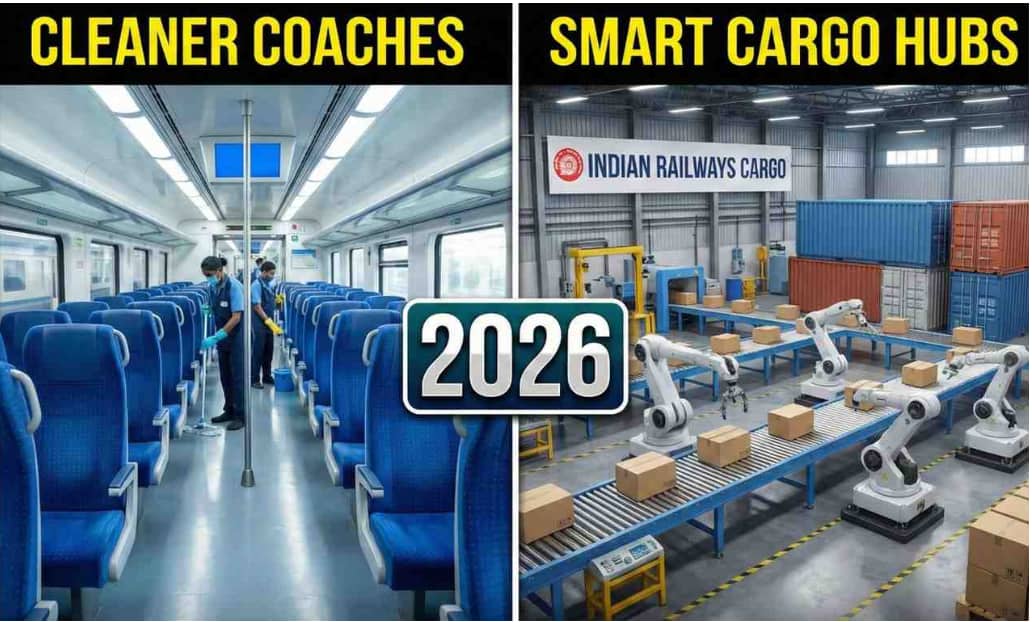
By The Indian Railways has started a bold new journey in 2026 by launching a massive plan called “52 Reforms in 52 Weeks.” This initiative means that the railway department will introduce one major change every single week throughout the year. The first few reforms announced by Railway Minister Ashwini Vaishnaw focus on two very important areas: making passenger coaches much cleaner and turning cargo terminals into smart processing centers. These changes are designed to make travel better for the common man and to help the country’s economy grow faster.
One of the most exciting changes is the new focus on cleaning general coaches. In the past, the railway mostly focused on cleaning the reserved and air-conditioned coaches during the journey. However, the new 2026 reform ensures that general coaches, where millions of people travel every day, will now be cleaned just like the premium ones. The old “Clean Train Station” model is being replaced with a “continuous cleaning” system. This means that a dedicated team will stay on the train from the start to the end of the trip to clean toilets, empty garbage bins, and wipe down cabins every one to two hours.
To make sure this cleaning is done perfectly, the railway is using advanced technology like Artificial Intelligence. Specialized cameras will take pictures of the toilets and coaches at regular intervals. These images will be sent to a “war room” control center where AI software will analyze them to check if the cleaning was done properly. If a coach is still dirty, the system will send an immediate alert, and the cleaning company might have to pay a fine. This high-tech monitoring ensures that service providers are held accountable for keeping the trains spotless for all passengers.
The second major reform focuses on transforming the way goods are moved across India. The government is expanding the Gati Shakti Cargo Terminals from 124 to over 500 in the coming years. A very big change here is that these terminals will no longer just be places for loading and unloading. They are now becoming “cargo plus processing” hubs. For example, instead of just moving raw cement material, a terminal can now have its own grinding and bagging unit. This allows businesses to process their products right at the station, which saves a lot of time and reduces the cost of transporting goods by nearly thirty percent.
In addition to cleaning and cargo, the railway is also simplifying how it manages services like bedsheets and blankets. Earlier, different companies handled the washing, packing, and distribution of linen. Now, one single agency will be responsible for everything. This “integrated model” makes it much easier to ensure that every passenger gets fresh and clean linen. Furthermore, the onboard teams will now be trained to fix minor electrical and mechanical issues like faulty lights or water taps immediately during the journey, so passengers do not have to wait until the next big station for repairs.
These reforms show that the Indian Railways is moving toward a more professional and technology-driven future. By focusing on the needs of general class passengers and improving the efficiency of freight, the national transporter is aiming to become a world-class service. As these 52 reforms roll out week after week, commuters can look forward to a much more comfortable, hygienic, and reliable travel experience across the entire country.
Under the “52 Reforms in 52 Weeks” initiative for 2026, Indian Railways has introduced continuous cleaning in general coaches using AI-based monitoring and real-time accountability. The reforms also upgrade Gati Shakti Cargo Terminals into smart processing hubs and streamline linen services. These measures aim to improve passenger hygiene, enhance freight efficiency, and modernize railway operations through technology-driven solutions.