


 By
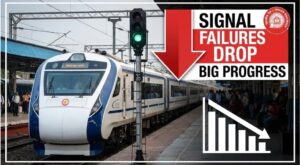
By The Indian Railways has achieved a very important goal in making train travel safer for everyone. According to a new report from the Ministry of Railways, the number of signal failures across the country has dropped by fifty-eight percent. This is a massive improvement that shows how much effort is being put into modernizing the tracks and the technology that guides the trains. For millions of people who travel by train every day, this news means fewer delays and a much higher level of safety during their journey.
Signalling is like the traffic light system for trains. It tells the driver when it is safe to move forward and when they must stop to avoid other trains. In the past, signal failures were a major cause of worry because they could lead to accidents or keep trains waiting for hours in the middle of nowhere. By reducing these failures by more than half, the Indian Railways is proving that its new systems are becoming more reliable and stronger than ever before.
This success is mainly due to the use of advanced technology and better maintenance practices. The government has been working hard to replace old and worn-out parts with new digital systems. These modern systems are designed to detect problems before they even happen. For example, if a wire is getting old or a light is about to break, the new technology sends an alert to the engineers so they can fix it immediately. This proactive approach prevents the signal from failing while a train is actually running on the tracks.
Another big reason for this improvement is the focus on training the railway staff. Thousands of workers have been taught how to use the new digital tools and how to perform quick repairs. The railway departments are also using better materials that can withstand extreme weather like heavy rain or intense heat. This is very important in a large country like India where the weather changes a lot from one region to another. By making the equipment tougher, the signals stay working even in difficult conditions.
Union Railway Minister Ashwini Vaishnaw has praised the railway teams for this achievement. He mentioned that safety is the top priority for the government and that every small improvement helps in building a world-class railway network. The reduction in signal failures also helps the trains run on time. When signals work perfectly, trains do not have to stop unexpectedly, which helps the entire schedule stay on track. This saves a lot of time for passengers and helps goods reach their destination faster.
While there is still more work to be done to reach zero failures, this fifty-eight percent reduction is a historic step forward. The government plans to continue investing in even better technology like the Kavach system, which is a special technology that automatically stops trains if they get too close to each other. As more and more sections of the Indian Railways get these upgrades, the travel experience for the common man will continue to get better, safer, and much more comfortable.
Indian Railways has achieved a 58% reduction in signal failures, marking a major safety milestone. The improvement comes through digital signaling upgrades, predictive maintenance systems, better materials, and staff training. The move enhances train punctuality and operational reliability. Continued deployment of advanced systems like Kavach will further strengthen railway safety across the national network.