

 By
By Indian Railways is making incredible progress in changing how trains run across the country by moving away from diesel and choosing electricity instead. According to recent reports, the national rail network is very close to achieving one hundred percent electrification. This is a massive achievement that will help the environment and make train travel much more efficient for everyone. By using more electric power, the railway is reducing its carbon footprint and helping India reach its goals for a cleaner and greener future.
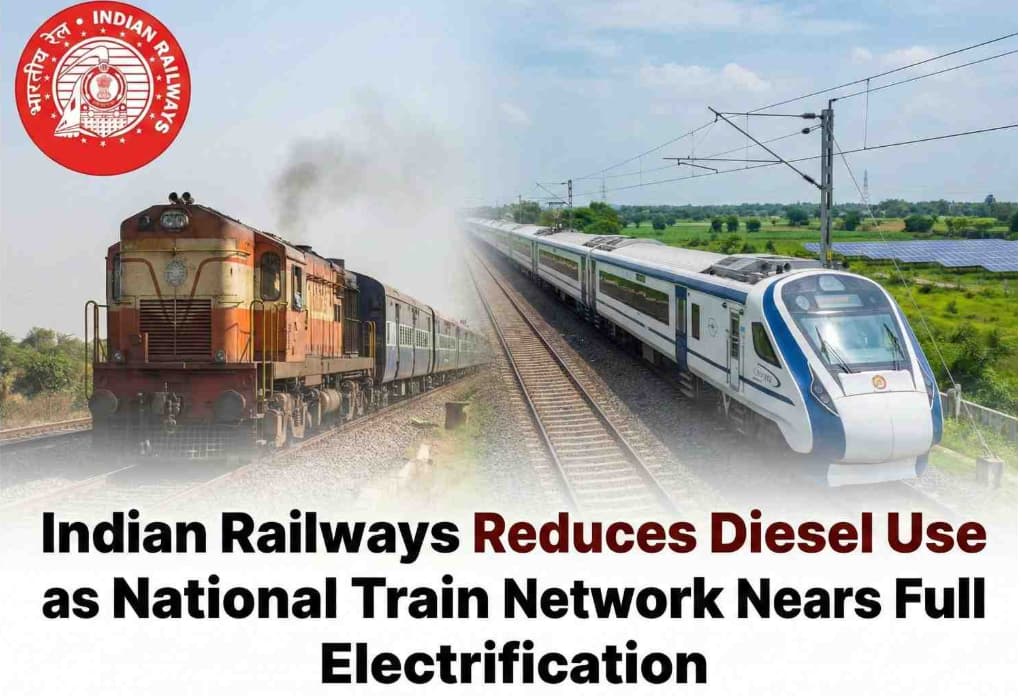
For many decades, most trains in India relied on diesel engines which produced a lot of smoke and were expensive to run. However, over the last few years, the government has worked at a very fast pace to install overhead electric wires on almost all tracks. Currently, more than ninety-five percent of the broad-gauge railway network has been electrified. This means that thousands of trains that used to run on diesel are now powered by clean electricity. This change is not only good for the air we breathe but also saves the government a lot of money that was previously spent on buying expensive fuel from other countries.
The shift to electric trains brings many benefits to the common man who travels every day. Electric engines are much more powerful than diesel ones, which allows trains to carry more coaches and move at higher speeds. This helps in reducing the time people spend on their journeys. Additionally, electric trains are much quieter and do not produce the heavy smell of burnt fuel, making the experience at railway stations and inside the coaches much more pleasant. Passengers can now enjoy a smoother and cleaner ride while knowing that their travel is not harming the nature around them.
Another great advantage of this project is that it makes the railway system more reliable. Electric engines generally need less maintenance than diesel engines, which means fewer breakdowns and delays. The Indian Railways is also working on sourcing more of its electricity from renewable energy like solar and wind power. This means that in the future, your train journey might be powered entirely by the sun or the wind. The goal of the government is to make the Indian Railways a “Net Zero Carbon Emitter” by the year 2030, which would be a world-class achievement for such a large network.
Even in remote areas and difficult terrains like mountains and forests, engineers are working hard to finish the electrification work. While some small sections still use diesel, they are being converted very quickly. The railway department is also training its staff to handle the new electric technology and ensure that safety remains the top priority. This transition is a proud moment for the country as it shows how modern technology can be used to improve a service that millions of people depend on every single day. As the final few kilometers of track are connected to the electric grid, India is setting an example for the rest of the world in sustainable transport.
Indian Railways is nearing 100% electrification of its broad-gauge network, significantly reducing diesel use and carbon emissions. With over 95% of routes already electrified, trains are becoming faster, cleaner, and more cost-efficient. The shift supports India’s Net Zero Carbon goal by 2030, lowers fuel imports, improves reliability, and promotes sustainable transport through increased use of renewable energy sources.