

 By
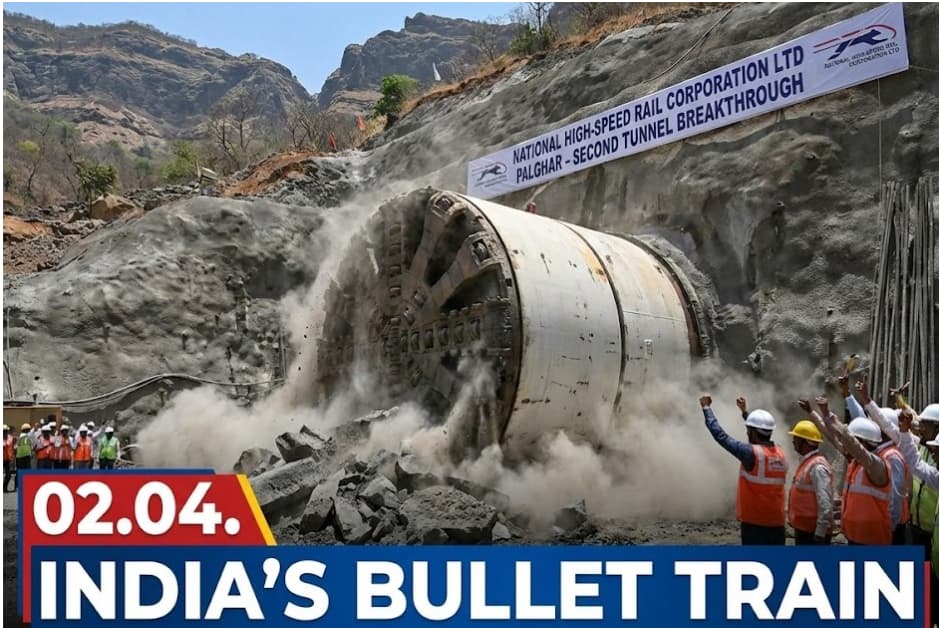
By PALGHAR — The ambitious Mumbai-Ahmedabad High-Speed Rail (MAHSR) project, popularly known as India’s first Bullet Train, has achieved another massive success. On February 3, 2026, engineers and workers celebrated the successful breakthrough of the second mountain tunnel in the Palghar district of Maharashtra. This major event marks a high point in the construction of the 508 kilometer corridor that will eventually connect Mumbai and Ahmedabad at incredible speeds.
In the world of engineering, a breakthrough is a very special moment. It happens when teams of workers digging from two different sides of a mountain finally meet in the middle. For this project, it means that a solid mountain has now been transformed into a clear path for the high-speed tracks. This achievement is particularly impressive because it is the second such breakthrough in Palghar in just one month. The previous tunnel, known as MT-5, was completed on January 2nd, showing that the pace of work is faster than ever before.
The newly completed tunnel is officially named MT-6. It stretches for 454 meters and has a width of 14.4 meters. This wide design is important because it allows for two sets of tracks, one for trains going toward Mumbai and one for trains going toward Ahmedabad to pass through the same tunnel safely. The entire excavation of this tunnel was completed in just 12 months, which is a very short time for such a difficult task through solid rock.
To build these tunnels in the rocky terrain of Palghar, engineers used a modern technique called the New Austrian Tunnelling Method (NATM). Instead of using a single giant boring machine, this method uses a careful process of drilling and controlled blasting. This allows engineers to be very flexible because they can adjust their plan in real-time if they find different types of rock or soil inside the mountain. This method is perfect for the irregular shapes and complex geography of the Palghar district.
Safety was the top priority during the entire 12 month construction period. The team used advanced sensors to monitor the ground, ensured there was plenty of fresh air for workers, and followed strict fire safety rules. Union Railway Minister Ashwini Vaishnaw praised the team and highlighted that many of the heavy machines and technologies used for this project are now being manufactured right here in India. This shows that the project is not just about building a train, but also about growing India’s own engineering skills.
The Bullet Train project is moving toward its goal of transforming travel in India. The Gujarat section of the line is expected to begin running next year, while the full corridor to Mumbai is targeted for completion by 2029. Once finished, the train will connect 12 major cities and make travel between Mumbai and Ahmedabad much faster and more comfortable for everyone. Each breakthrough like the one in Palghar brings India one step closer to a new era of high-speed transportation.
India’s Mumbai–Ahmedabad Bullet Train project achieved a major milestone with the successful breakthrough of the second mountain tunnel (MT-6) in Palghar. Built using the New Austrian Tunnelling Method (NATM), the 454-meter tunnel was completed in just 12 months. This marks rapid progress on the 508 km high-speed corridor, bringing India closer to operational high-speed rail connectivity by 2029.