

 By
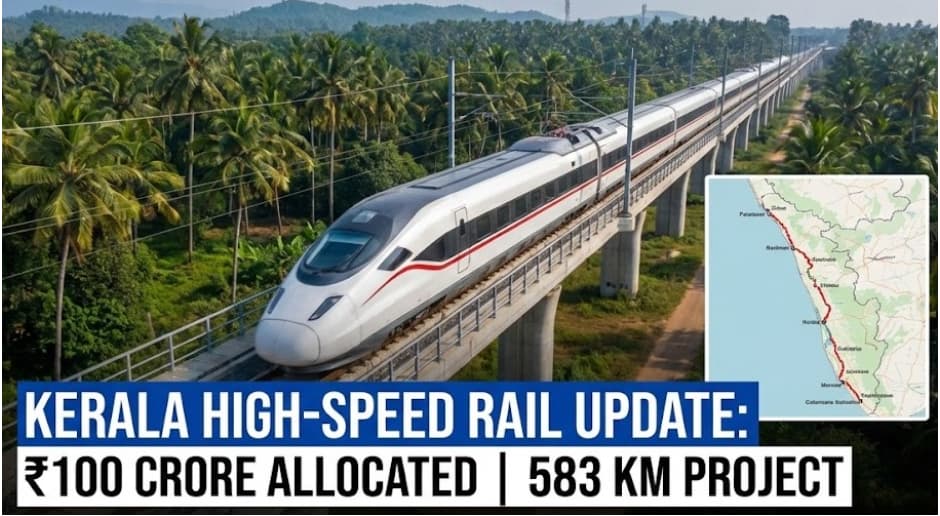
By THIRUVANTHAPURAM — The Kerala government has taken a massive step towards modernizing travel in the state. In the latest budget announcement, Finance Minister K.N. Balagopal revealed that ₹100 crore has been set aside to begin the initial work on the Regional Rapid Transit System (RRTS). This project is set to be a game changer for Kerala, providing a high speed rail corridor that stretches 583 km from Thiruvanthapuram in the south to Kasaragod in the north.
This new project comes as a replacement for the “Silver Line” K-Rail project, which faced several technical hurdles. The RRTS aims to offer a faster, more efficient way for people to travel across the state, connecting major cities and urban metros.
A Four Phase Plan for Success
The government has designed the project to be completed in four clear phases. This organized approach ensures that construction can be managed effectively across the different regions of Kerala.
Phase 1: Thiruvanthapuram to Thrissur: The first part of the project covers a distance of 284 km. The government expects construction for this phase to begin in 2027, with a goal to finish by 2033. This stretch will serve as a backbone of the entire corridor, linking the state capital to central Kerala.
Phase 2: The Malabar Line (Thrissur to Kozhikode): The second phase will focus on the Malabar region. Interestingly, the phase will be developed alongside the Kozhikode Metro project. By building these two systems together, the government hopes to create a seamless travel experience for people moving within and between cities.
Phase 3: Connecting the North (Kozhikode to Kasaragod): This phase will complete the main corridor by building the lines from Kozhikode to Kannur and finally from Kannur to Kasaragod. Once this is finished, the entire 583 km length of Kerala will be connected by high-speed rail.
Phase 4: Expanding beyond State Borders: The vision does not stop at Kasaragod. In the final phase, the government plans to extend the lines even further. Plans include connecting to Coimbatore via Palakkad, extending south to Kanyakumari, and heading north to Mangalore.
Why is it Happening Now?
For years, Kerala has struggled with slow travel times on its existing rail and road networks. The previous “Silver Line” project was stalled because the Indian Railways had technical objections. To solve this, the State Cabinet officially approved the RRTS project this week.
By choosing the RRTS model, the state is following a system that has worked well in other parts of India (like the Delhi-Meerut corridor). It is designed to be faster than regular trains but more flexible than a traditional bullet train.
What Happens Next?
The ₹100 crore allocated in the budget will be used for initial works. This includes things like Detailed Survey, Technical Studies and Consultations. The Kerala government will soon send a formal letter to the Central Government to express its interest. Once the centre gives the in-principle approval, a Memorandum of Understanding (MoU) will be signed. If everything goes according to the plan, the entire project could be completed within the next 12 years.
What This Means for the People of Kerala?
For the average citizen, this project means a future where you can travel from one end of the state to the other in just a few hours. It will reduce the number of cars on the road, lower pollution, and make it easier for people to work in one city while living in another.
By connecting with local Metros (like Kochi and Kozhikode), the RRTS will create a “total transport solution” where you can hop off a high-speed train and straight onto a local metro to reach your final destination.
While ₹100 crore is just the beginning for such a massive project, it signals a strong commitment from the Kerala government to bring world-class transportation to its people.
Kerala has allocated ₹100 crore to begin work on a 583-km Regional Rapid Transit System (RRTS) corridor from Thiruvananthapuram to Kasaragod. Planned in four phases, the high-speed rail project will replace the stalled Silver Line and improve statewide connectivity. Designed to integrate with metro networks and reduce travel time, the corridor aims to modernize Kerala’s transport system over the next decade.