


 By
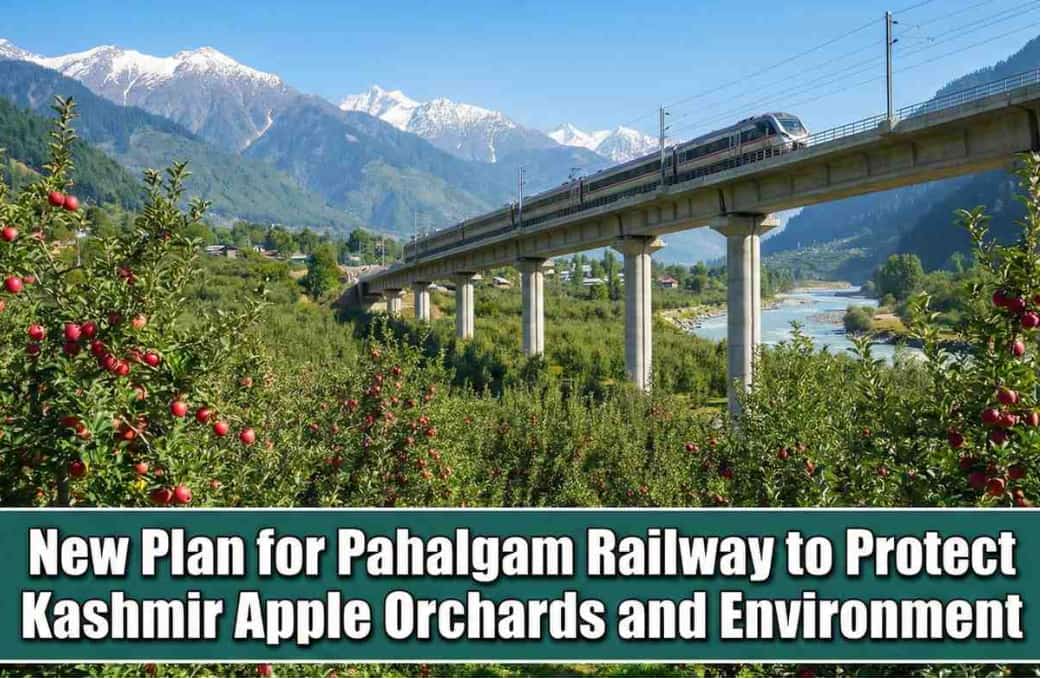
By A new and clever idea has been suggested for the railway line to Pahalgam that could save the famous apple orchards of Kashmir. Instead of cutting through new fields and gardens, experts are suggesting that the new railway should follow the path of the existing roads. This plan is called “corridor integration,” and it aims to bring modern transport to the region without damaging the beautiful nature that people love. It would mean that the railway and the road would run side by side in the same area.
For many months, there has been a big debate in South Kashmir about the proposed railway to Pahalgam. Many local farmers were worried because they thought the train tracks would destroy their apple trees and farm lands. Apple farming is the main way many families earn money in this area, so protecting the orchards is very important. However, this new suggestion shows that the city can have both a railway and its apples. By using the land that is already being used for roads, the railway does not have to take away new green spaces.
This way of building is very common in other parts of the world with high mountains, such as Switzerland, Japan, and France. In these countries, engineers place highways and railway lines together in one narrow strip. This prevents the landscape from being ruined in many different places. Since the road to Pahalgam has already been widened and modified over many years, nature has already adjusted to it. Placing the railway next to this road would be much better for the environment than making a brand-new scar across the valley.
Using the same path for both the road and the rail has many other benefits too. It makes it easier to manage water drainage and protect the area from landslides because all the work is done in one place. It also helps wildlife because animals only have to cross one transport area instead of two separate ones. For the farmers, this means their irrigation channels and paths stay connected, and they can keep growing their fruit right next to the moving trains. It creates a single “transport spine” that serves the whole valley efficiently.
The idea is that instead of arguing about whether to have development or protect nature, the people can choose coordinated development. This means building carefully just once, rather than digging up the land again and again for different projects. The experts believe that if this plan is followed, the people of Kashmir can enjoy the benefits of a modern railway while keeping their heritage and orchards safe. It is a way to ride the path of progress without losing the natural beauty that makes Pahalgam so special.
If the government and the public agree on this shared path, the railway could become a great help for tourism and local travel. It would reduce the number of cars on the road and make it easier for people to reach the mountains. Most importantly, it would prove that with good planning, technology can work with nature instead of against it. The choice for the future is now in the hands of the local community and the planners to build a better and greener Kashmir.
A new proposal suggests aligning the planned Pahalgam railway alongside existing roads to protect Kashmir’s apple orchards and environment. The “corridor integration” approach would minimize land acquisition, prevent damage to farmlands, and reduce ecological impact. By combining rail and road infrastructure in a single transport corridor, the plan aims to balance development, tourism growth, and environmental conservation in South Kashmir.