
 By
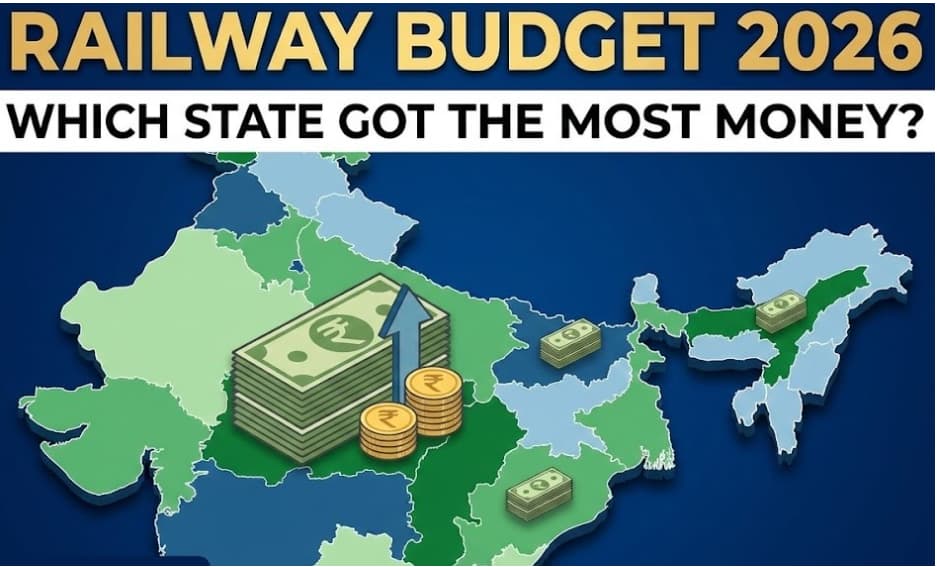
By The Indian government has announced a massive plan for the country’s trains in the Union Budget 2026-27. Finance Minister Nirmala Sitharaman and Railway Minister Ashwini Vaishnaw have shared how much money each state will get to improve its railway stations, tracks, and safety. This year, the Ministry of Railways received its highest-ever budget of ₹2,78,030 crore. This money will be used to make train travel faster, safer, and more comfortable for everyone.
Which State Tops the List?
Maharashtra has been allocated a record ₹23,926 crore (some reports suggest it could go up to ₹24,000 crore). Following closely is Uttar Pradesh, which received ₹20,012 crore. These two states are getting the biggest share because of many new projects, including high-speed “bullet” trains and major station upgrades.
Railway Budget 2026: State-Wise Allocation List
Here is a simple breakdown of how much money major states received for their railway development:
Andhra Pradesh | 10,134 |
Assam & NE Region | 11,486 |
Bihar | 10,379 |
Chhattisgarh | 7,470 |
Delhi | 2,711 |
Goa | 515 |
Gujarat | 17,366 |
Haryana | 3,566 |
Himachal Pradesh | 2,911 |
Jammu & Kashmir | 1,086 |
Jharkhand | 7,536 |
Karnataka | 7,748 |
Kerala | 3,795 |
Madhya Pradesh | 15,188 |
Maharashtra | 23,926 |
Odisha | 10,928 |
Punjab | 5,673 |
Rajasthan | 10,228 |
Tamil Nadu | 7,611 |
Telangana | 5,454 |
Uttarakhand | 4,769 |
Uttar Pradesh | 20,012 |
West Bengal | 14,205 |
Exciting New High-Speed Rail Corridors
One of the most exciting parts of this budget is the announcement of seven new high-speed rail corridors. These are like “bullet train” routes that will connect major cities and reduce travel time significantly.
The planned routes include:
- Delhi to Varanasi (Travel time reduced to less than 4 hours!)
- Varanasi to Siliguri (Connecting UP, Bihar, and West Bengal)
- Mumbai to Pune
- Pune to Hyderabad
- Hyderabad to Bangalore
- Hyderabad to Chennai
- Chennai to Bangalore
Railway Minister Ashwini Vaishnaw mentioned that these corridors would act as “growth engines,” helping businesses grow and making it easier for people to travel for work or education.
Focus on Safety and Modern Stations
The government is not just building new tracks; they are also fixing old ones. Under the Amrit Station Scheme, hundreds of railway stations across India are being redesigned. For example, in Andhra Pradesh, 73 stations are being redeveloped, while in Punjab, 30 stations are getting a makeover.
These modern stations will have better waiting rooms, cleaner platforms, and more shops. The budget also focuses on Kavach, an Indian-made technology that helps prevent train accidents by automatically stopping trains if they get too close to each other.
Special Plans for the Northeast
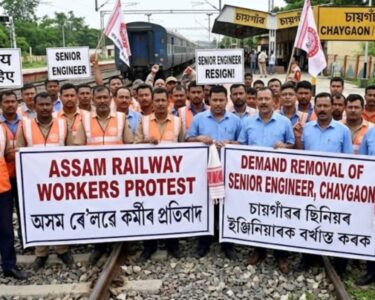
The Northeast region of India is getting a special boost with ₹11,486 crore. The government wants to make sure every state in the Northeast is well-connected to the rest of India. There is even a plan for a 40-km underground railway track in West Bengal to help trains move faster toward the Northeast.
What This Means for You
For the common passenger, this budget means more Vande Bharat and Amrit Bharat trains. It also means that in the coming years, your local railway station might look like a modern airport, and your long-distance journeys will become much shorter.
The government’s goal is to reach “Vikasit Bharat” (Developed India) by 2047, and they believe that a strong, fast, and safe railway system is the best way to get there. Whether you live in a big city like Mumbai or a smaller town in Kerala, these changes are designed to make your travel experience better than ever before.
Union Budget 2026-27 allocates a record ₹2,78,030 crore to Indian Railways, with Maharashtra and Uttar Pradesh receiving the highest shares. The budget emphasizes seven new high-speed rail corridors, Amrit Station redevelopment, Kavach safety technology, and stronger Northeast connectivity. With major investments in modernization and passenger facilities, the government aims to make rail travel faster, safer, and more efficient nationwide.