
 By
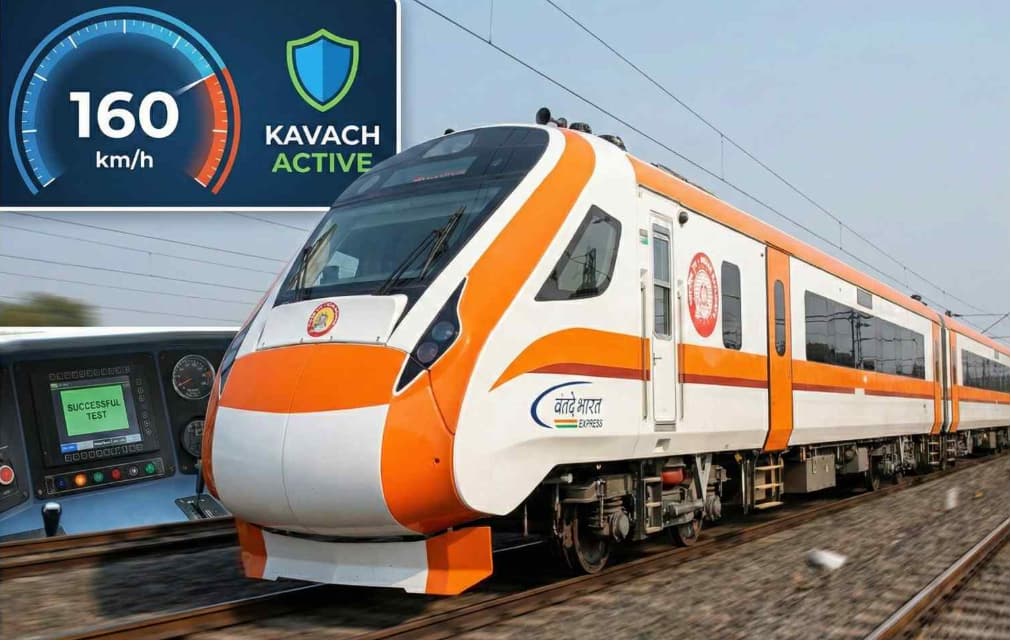
By Indian Railways has reached a very important milestone in making train travel safer for everyone. Recently, officials conducted a successful high-speed trial of the Kavach safety system on the track between Dadri and Tundla. During this test, a Vande Bharat train reached a speed of one hundred and sixty kilometers per hour. This is a big deal because it proves that India’s own safety technology can work perfectly even when trains are moving very fast. The trial was supervised by senior railway experts to ensure that the system could handle high speeds without any errors.
The Kavach system is a special kind of technology that acts like an extra set of eyes for the train driver. Its main job is to prevent accidents by automatically applying the brakes if the system senses a danger. For example, if two trains are on the same track and moving toward each other, Kavach will stop them before they can collide. It also helps if a driver accidentally misses a red signal or if the weather is very foggy and the tracks are hard to see. By testing this at one hundred and sixty kilometers per hour, the railway department is showing that it wants to combine high speed with the highest level of safety.
The Dadri-Tundla section was chosen for this test because it is a very busy part of the North Central Railway. This area is part of the main route that connects Delhi with other major cities. During the trial, the Vande Bharat rake was equipped with the latest Kavach sensors and computers. The system worked exactly as planned by controlling the speed of the train and ensuring it stayed within safe limits at all times. This successful test gives the government a lot of confidence to start installing this safety technology on more tracks across the country.
One of the best things about Kavach is that it is made in India. This means it is much cheaper than similar systems used in other countries, but it still works just as well. The government has a big plan to cover thousands of kilometers of railway tracks with this technology over the next few years. This is especially important for the new Vande Bharat trains which are designed to travel at high speeds. When passengers know that a smart computer system is watching over their journey, they can feel much more relaxed and secure while traveling.
The railway minister has often spoken about the importance of “Zero Accidents” on Indian tracks. This high-speed trial is a giant step toward reaching that goal. In the future, the railway hopes to have every single train in India protected by Kavach. This will not only save lives but also make the trains more punctual because the system helps manage traffic more efficiently. Even in heavy rain or thick winter fog, the Kavach system will help drivers know exactly where they are and when they need to slow down.
The successful test on the Dadri-Tundla section is a proud moment for Indian engineers. It shows that the country is becoming a leader in modern railway technology. As the railway continues to upgrade its tracks and trains, safety will always remain the most important priority. Passengers can now look forward to a future where they can travel across India faster than ever before while being protected by the most advanced safety systems in the world.
Indian Railways successfully tested the indigenous Kavach safety system at 160 km/h using a Vande Bharat train on the Dadri–Tundla section. The trial proved that Kavach can automatically control speed and prevent collisions even at high speeds. This milestone strengthens India’s goal of zero accidents while supporting faster train operations and expanding advanced safety technology across the railway network.