

 By
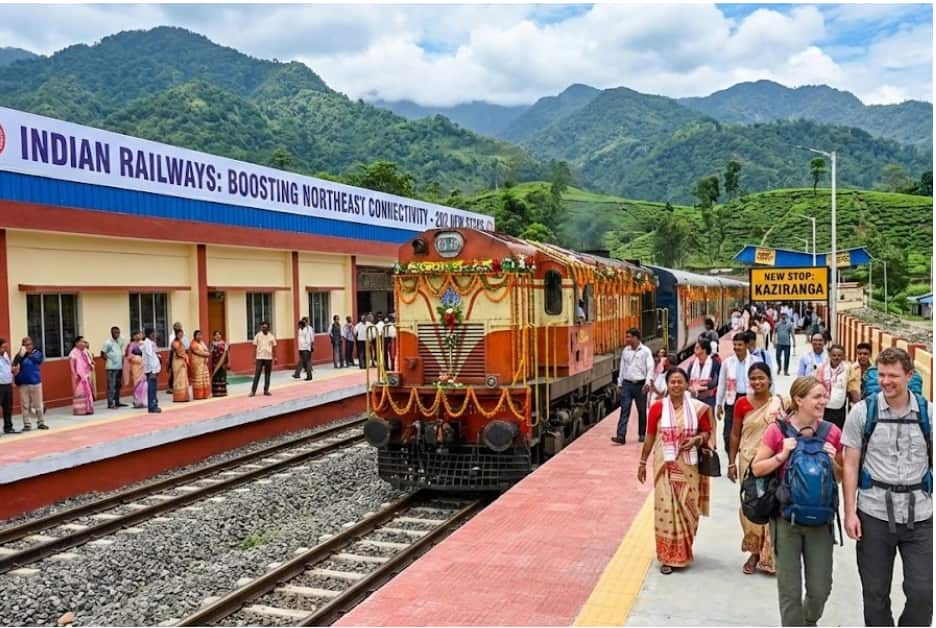
By Indian Railways has made a big change to improve Northeast connectivity by adding 202 additional train stops in the Northeast Frontier Railway (NFR) zone. This new plan will help many people in Assam, West Bengal and Bihar. It will make travel easier for local passengers, business travellers, and tourists in the region.
The main goal of Indian Railways is to make travel simpler for people living in small towns and rural areas. In many places, people had to travel far to reach big train stations. With these new train stops, now long-distance trains will stop at more places. This means more places in the Northeast can connect with major cities through train travel.
What is Happening With the New Train Stops
Under the new plan, Indian Railways has added 202 extra train stops at 82 stations under the NFR zone. This includes areas of Assam, West Bengal and Bihar. These extra stops are being introduced on an experimental basis. This means Indian Railways will watch how many people use these stops and decide if they should continue permanently.
This move will help many trains that normally do not stop in smaller towns. Key express trains like the Vande Bharat Express, Rajdhani Express and other long-distance services will now stop at new stations. Some important new stops include Ranjiya for the Vande Bharat Express and New Haflong and New Cooch Behar for the Rajdhani Express. Other stops like Katicherra and Katakhal on routes like Guwahati-Sairang Express have also been added.
Why Is This Good For Travellers?
For many people, the new train stoppages are a big benefit. Before this change, passengers in small towns had to travel long distances to catch big trains. Now, many residents can travel easily from their towns without going to bigger cities. These new stops make train travel more convenient and easy to plan.
People who travel for business will also save time. They can now use big long-distance trains from closer stations. For tourists, the changes are good news too. The Northeast region of India is rich with beautiful nature, tea gardens, national parks, and cultural sites. With more train stops, visitors can more easily reach places like Sibsagar, Vishwanath Chariali, and New Cooch Behar to explore scenic views and cultural places.
Impact on Northeast Connectivity
This move is part of a bigger plan by Indian Railways to improve Northeast connectivity and include more small and remote areas into the national train network. Over the past years, rail routes and stations in the Northeast have grown significantly. The government has also worked on new railway lines, better transportation, and train services to connect people to the rest of the country.
Railway officials have said that they will study how the new stops are used by passengers during the trial period. If enough people use these extra stops, some or all may become permanent stops for trains. This will be good for daily passengers, business groups, and tourism in the Northeast.
What Passengers Should Know
Passengers are advised to check the updated train schedule before traveling. Train schedules may change once the new stops begin. The official Indian Railways enquiry system and train schedule apps will have the newest information.
In summary, this network expansion by Indian Railways will help improve travel, make long routes easier for passengers to access, and support tourism and local businesses. With the additional 202 train stoppages, rail travel in the Northeast is set to become more reliable, friendly, and convenient for many people.
Indian Railways has introduced 202 additional train stoppages across 82 stations in the Northeast Frontier Railway zone on a trial basis. The move aims to improve connectivity in Assam, West Bengal, and Bihar, benefiting local passengers, businesses, and tourists. Several major express services will now halt at smaller stations, enhancing regional access and strengthening Northeast rail integration.