

 By
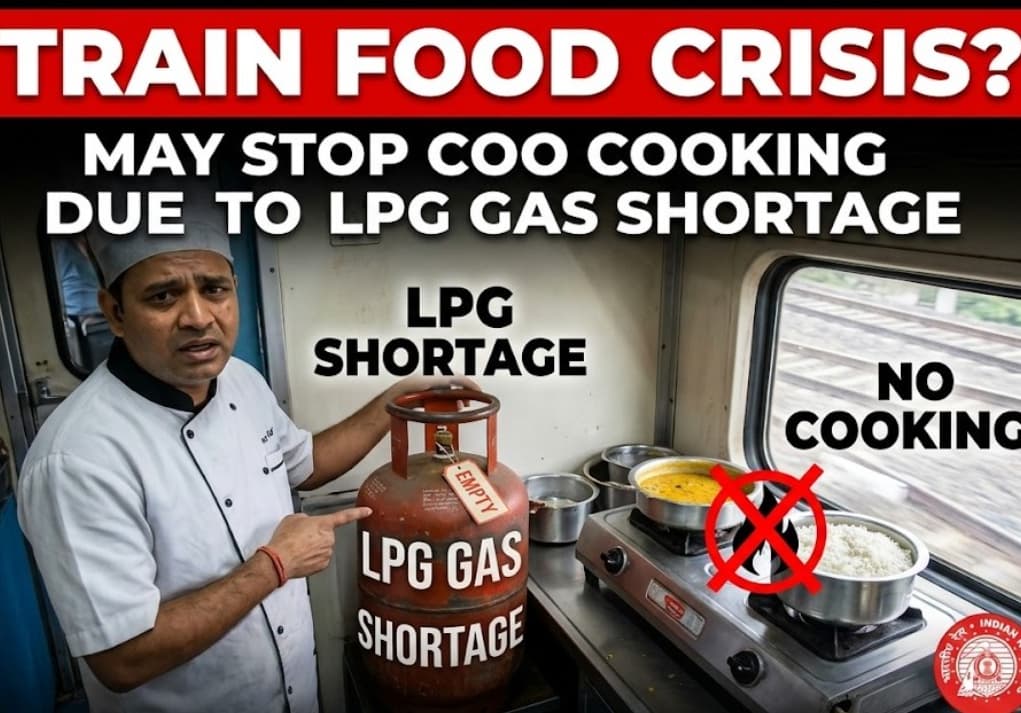
By Indian Railways is currently facing a big challenge that might change how people eat during their journeys. According to recent reports, the railway department might temporarily stop providing cooked meals to passengers on many trains. This situation is happening because there is a serious shortage of LPG gas cylinders which are used for cooking in the pantry cars of the trains. If this happens, millions of passengers who travel every day will have to find other ways to get their breakfast, lunch, and dinner while they are on the move.
The main reason for this problem is the LPG crisis that has affected the supply chain of gas cylinders. Usually, every long-distance train has a special coach called a pantry car where chefs prepare fresh food for the travelers. They use several gas cylinders to cook rice, dal, vegetables, and snacks. However, without enough gas, it is becoming very difficult for the catering staff to keep the stoves running. The railway authorities are worried that if the gas supply does not improve very soon, they will have no choice but to stop the cooking services inside the trains for a short period of time.

This news is very important for people who plan their trips and rely on the food served by the railways. Many passengers, especially elderly people and families with small children, prefer to buy food on the train because it is hot and convenient. If the cooking stops, the railway department might start providing “ready-to-eat” meals instead. These are pre-packed food items like biscuits, chips, or meals that only need hot water to be ready. While this helps people stay full, it is not the same as the fresh food that passengers are used to eating.
The railway officials are looking for different solutions to manage this crisis. They are talking to gas companies to see if they can get a steady supply of cylinders for the trains on a priority basis. At the same time, they are also thinking about increasing the number of e-catering services. E-catering allows passengers to order food from private restaurants through a mobile app or website, and the food is delivered to their seat when the train reaches a big station. This could be a good alternative if the pantry cars cannot function normally.
Another option the railways might use is to prepare food at base kitchens located at major railway stations. Instead of cooking while the train is moving, the food would be cooked on the ground where there is a better supply of gas or electricity. Once the food is ready, it would be packed into boxes and loaded onto the trains at specific stops. This way, passengers can still get a warm meal, even if it was not cooked right inside the train coach.
If you are planning to travel by train in the next few weeks, it is a very good idea to be prepared for these changes. You should check the latest news and updates from the Indian Railways before you start your journey. It might be wise to carry some home-cooked food or dry snacks with you just in case the catering service on your train is limited. Carrying extra water and some fruits is also a helpful tip for any long trip.
The railway department understands that this situation is not easy for the passengers. They are working hard to fix the problem as fast as possible. They want to make sure that the LPG crisis does not ruin the travel experience for the public. Everyone is hoping that the gas supply returns to normal very soon so that the delicious smell of fresh food can once again come from the pantry cars of Indian trains. Until then, passengers will need to be a little patient and flexible with their food choices during their rail travel.
Indian Railways may temporarily stop cooking food in pantry cars due to a shortage of LPG gas cylinders used for onboard catering. The move could affect many long-distance trains if supply issues continue. Authorities are exploring alternatives such as ready-to-eat meals, base kitchen food loading at stations, and expanded e-catering services to ensure passengers can still access meals during their journeys.