

 By
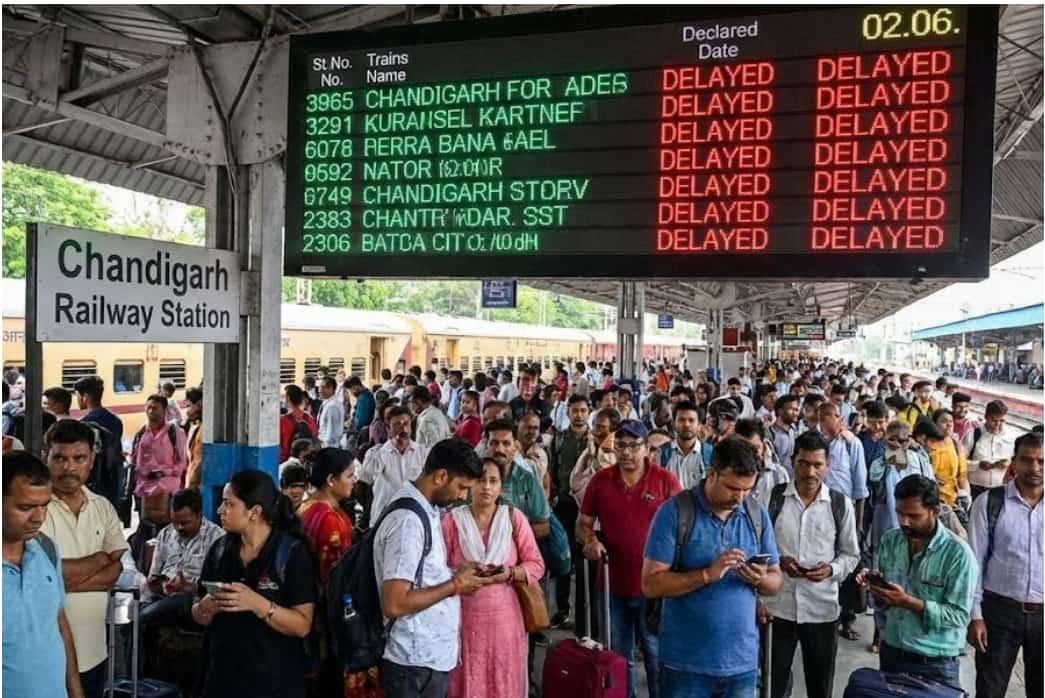
By Passengers at Chandigarh Railway Station faced another difficult day on February 6, 2026, as train operations remained heavily disrupted. At least 10 major trains arrived late, leaving hundreds of travelers stranded on platforms in the cold. While many expected smoother travel as the peak of winter passed, a combination of technical failures and lingering seasonal weather caused significant schedules to fall apart once again.
The most dramatic delay of the day involved the Unchahar Express, which travels from Prayagraj to Chandigarh. This train reached its destination more than 10 hours behind schedule, arriving at 7:38 PM instead of its planned morning arrival at 9:15 AM. Such long waits have become a common frustration for passengers on this route, often forcing people to spend an entire day waiting at the station or adjusting their work and family plans at the last minute.
Other long-distance services also struggled to maintain punctuality. The Goa Sampark Kranti Express arrived approximately two hours late, reaching the station at 8:07 PM. Similarly, the Chandigarh-Lucknow Superfast Express faced a two-hour delay, which pushed its arrival to 7:25 PM. These delays show that trains traveling from far-off states are finding it difficult to navigate through the northern regions where operational challenges remain high.
Even the high-priority premium trains, which are usually known for their speed and reliability, were not spared. The evening Kalka Shatabdi Express arrived at 10:55 PM, which was two and a half hours later than its scheduled time of 8:30 PM. Railway officials explained that this specific delay was caused by a technical problem near Delhi. The train was reportedly stuck for nearly three hours at Badli station because of damage to an overhead transmission wire, which provides power to the train.
The Chandigarh Shatabdi Express was also late by 46 minutes because it departed late from New Delhi. Meanwhile, the modern Amb Andaura Vande Bharat Express reached Chandigarh 30 minutes behind schedule. Even though these delays were shorter than the long-distance trains, they still caused a lot of stress for daily business travelers and commuters who rely on these fast services for their tight schedules.
While technical issues played a part, the primary reason for these ongoing delays is the dense fog that continues to cover parts of North India. Even in February, low visibility in the early morning and late night makes it dangerous for train drivers to maintain full speed. To ensure everyone stays safe, Indian Railways often enforces stricter speed limits in foggy areas, which naturally leads to delays that pile up throughout the day.
To manage this, the railway administration has already temporarily cancelled or reduced the frequency of over 50 trains across the region until March 1, 2026. Officials have urged all passengers to check their train status online or through mobile apps before leaving for the station. As the winter season slowly transitions, these safety-first measures remain the top priority, even if they result in temporary inconvenience for the traveling public.
Train services at Chandigarh Railway Station were severely disrupted on February 6, 2026, with at least 10 major trains running late due to dense fog and technical issues near Delhi. Premium services like Kalka Shatabdi and Vande Bharat Express were also affected. Railways have temporarily cancelled or reduced over 50 trains until March 1 to prioritize passenger safety.