

 By
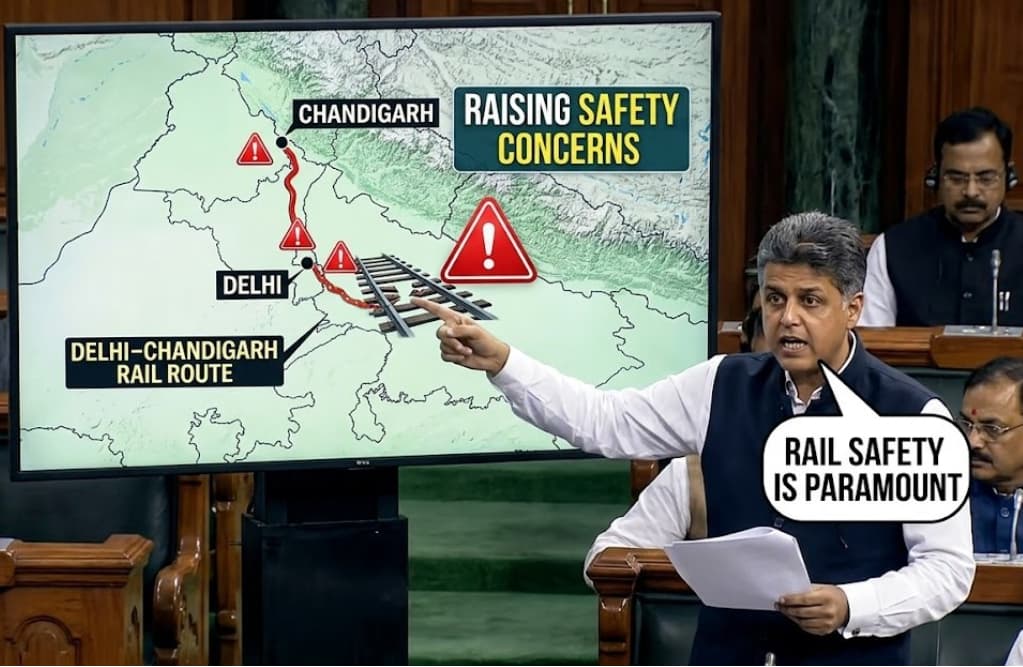
By The safety of railway passengers is a very important topic in India. Recently, Member of Parliament Manish Tewari spoke about this in the Lok Sabha. He raised serious concerns regarding the safety of the rail route between Delhi and Chandigarh. This route is one of the busiest in North India, used by thousands of people every day. Many people travel on this line for work, studies, and business. Because so many lives depend on this track, the MP wanted the government to pay more attention to its condition.
During the discussion, Manish Tewari pointed out that the railway infrastructure needs more care. He mentioned that there are certain technical issues that could lead to accidents if they are not fixed quickly. Safety is not just about the trains but also about the tracks, the signaling system, and the bridges. If any of these parts are weak, it can be dangerous for the passengers. By speaking in the Lok Sabha, the MP aimed to make sure that the Railway Ministry takes immediate action to inspect and repair the route.
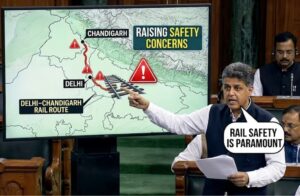
One of the main points discussed was the need for modern technology. In many parts of the world, railways use advanced systems to prevent collisions and track failures. The MP suggested that such technology should be used more effectively on the Delhi-Chandigarh route. He believes that relying on old methods is not enough anymore. As the speed of trains increases, the safety systems must also become better. This will give passengers more confidence when they travel between the national capital and the City Beautiful.
The MP also talked about the importance of regular maintenance. Sometimes, small problems like a loose bolt or a tiny crack in the rail can cause big disasters. He urged the railway authorities to conduct more frequent checks. He said that the staff working on the tracks should have the best tools and training to find problems before they become serious. This proactive approach is necessary to ensure that every journey is a safe one.
Another concern raised was about the railway crossings. On the route between Delhi and Chandigarh, there are several spots where roads and tracks meet. These places can be very risky if they are not managed well. Manish Tewari asked for better gates and more staff at these crossings. He also suggested building more overbridges or underpasses so that vehicles and trains do not have to cross each other’s paths. This would make the movement of both trains and cars much safer and faster.
The speech in Parliament has started a new conversation about railway safety in the region. People living in Chandigarh and nearby areas are happy that their representative is talking about their safety. Many travelers have shared their own experiences of feeling worried about the speed and stability of the trains. They hope that the government will listen to the MP and provide more funds for this specific rail line.
In conclusion, the effort by Manish Tewari highlights a very basic but essential need for safe travel. The Delhi-Chandigarh rail route is a lifeline for the region. Ensuring its safety is the responsibility of the central government. By bringing this issue to the Lok Sabha, the MP has ensured that the authorities cannot ignore the potential risks. Everyone is now waiting to see what steps the Railway Ministry will take to modernize the tracks and protect the millions of people who travel on them every year. Reliable and safe railways are key to the progress of the country.
Manish Tewari raised safety concerns about the busy Delhi–Chandigarh rail route during a discussion in the Lok Sabha. He urged the Railway Ministry to strengthen infrastructure, improve signaling systems, and enhance maintenance to prevent accidents. The MP also suggested upgrading railway crossings and adopting modern safety technologies.