

 By
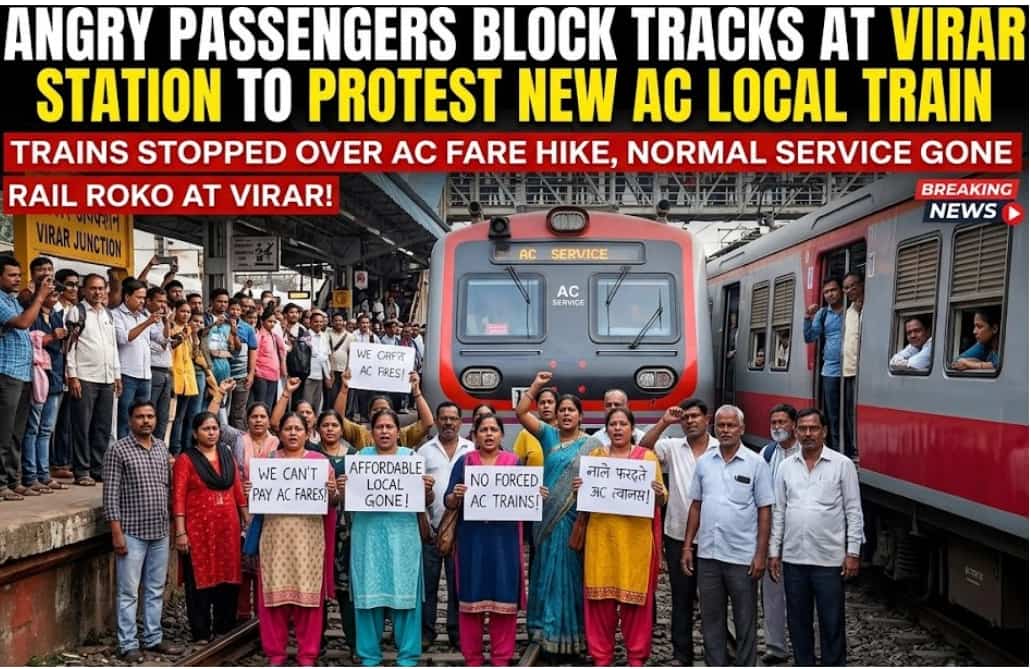
By A quiet Monday morning at the busy Virar railway station turned into a scene of loud protests. A group of daily commuters got very angry and decided to stand on the railway tracks to stop the trains. In India, this kind of protest is popularly known as a “rail roko” protest. Around fifteen to twenty passengers, including several women, climbed down onto the tracks right in front of a train. They shouted slogans against the railway management, which caused all the trains on the busy Western Line to run late.
The main reason for this sudden protest was a change in the train timetable. The Western Railway decided to convert a very popular regular train into an air-conditioned train. This was the eight twenty-eight morning local train that goes from Virar to Churchgate. For many years, this train was a normal, non-AC train that anyone could board with a cheap ticket. However, starting in May, the railway company changed it to an AC service. This change made daily commuters very upset because they lost a highly convenient and affordable ride during the busiest morning hours.
Many passengers explained that they cannot afford the expensive tickets of the new AC trains. The fares for these air-conditioned trains are much higher than the tickets for regular first-class or second-class coaches. Commuters argued that the government is forcing middle-class families to spend extra money on travel. They also pointed out a big planning mistake. There is already another AC local train scheduled to run at eight thirty-three in the morning, which is just five minutes after the newly changed train. Having two expensive AC trains running back-to-back makes no sense to the daily passengers.
This change also causes other big problems for people who cannot buy the expensive AC tickets. Since a regular train was removed from the schedule, the remaining normal trains have become incredibly crowded. Commuters say that the heavy rush during peak hours is already dangerous, and removing even one normal train makes the situation much worse. This forces too many people to squeeze into fewer trains, creating a scary and uncomfortable journey for everyone.
The protest on the tracks lasted for about ten to twelve minutes before the railway security police arrived. The police officers talked to the angry protestors and slowly removed them from the railway tracks so that the trains could start moving again. Even though the protest was short, it caused a chain reaction of delays. Many other local trains along the Western Line were delayed, leaving thousands of passengers waiting on crowded platforms at other stations.
The Western Railway officials did not support the protest and called it illegal. They stated that getting down on the tracks is extremely dangerous and against the law. They also explained that they are adding more AC trains because the number of passengers who want to travel in air-conditioned comfort is growing very fast every year. According to their data, more and more people are happy to pay more money to escape the hot weather.
However, passenger groups say that the railway office needs to be more careful. They believe the authorities should talk to the public and passenger associations before replacing popular cheap trains with expensive ones. While the trains are back to running normally now, the protest showed how difficult life can be for daily workers when their regular travel routines are changed without their agreement.
Daily commuters at Virar station staged a “rail roko” protest after Western Railway converted the popular 8:28 AM Virar–Churchgate local into an AC train. Passengers argued that expensive fares and reduced non-AC services are making travel difficult and overcrowded during peak hours. The short protest disrupted Western Line services and highlighted growing concerns over affordable public transport for middle-class commuters.