

 By
By There is a very big argument happening in Canada right now about a new train project. The Canadian government, led by the Liberal party, wants to build a super-fast train. This new train would connect the big cities of Toronto and Quebec City. It would also stop in other important places like Ottawa, Montreal, Peterborough, Laval, and Trois-Rivières. This train is called a high-speed rail. It is supposed to move people much faster than normal trains. For example, it could take people from Montreal to Toronto in just three hours. This is half the time it takes to drive a car between the two cities. Many people think this is a wonderful idea because it will make travel very easy and fast.
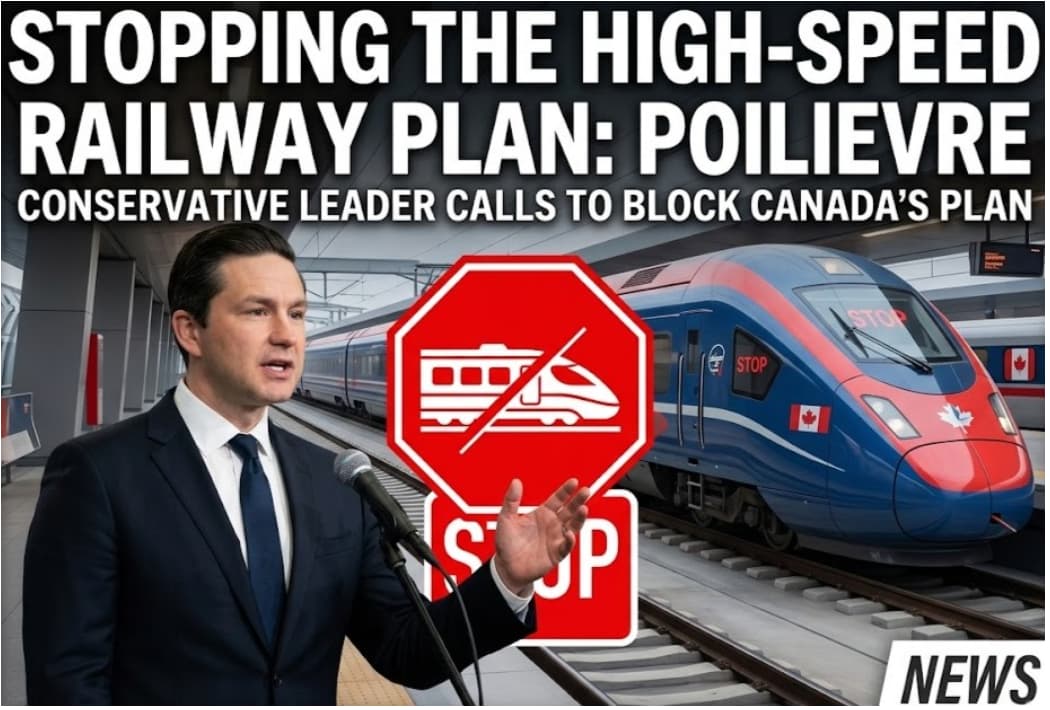
However, not everyone agrees with this huge project. Pierre Poilievre is the leader of the Conservative Party in Canada. He is the main person who argues against the current government. He recently said that the government needs to cancel this entire train project immediately. He gave a speech near the city of Peterborough and called the project a huge waste of money. He said the plan is just a dream that costs too much. He believes the government is spending money they do not have on things that do not make sense.
The biggest problem for Pierre Poilievre is the cost of the new train. Building a high-speed railway from Toronto to Quebec City is going to be very expensive. Experts guess that the project will cost somewhere between sixty billion and ninety billion dollars. This is a massive amount of money. The company in charge of building the railway is called Alto. They want to start building the tracks between Ottawa and Montreal before the end of this decade. But before they can build, they need land. This brings up another huge issue that makes people upset.
To build the new tracks, the government needs to use a lot of land. Some of this land belongs to regular people and farmers. The company Alto recently said they will start asking land owners for permission to look at their property. They want to see if the land is good for the train tracks. The head of Alto, Martin Imbleau, said he wants to pay people fairly for their land. But he also said that the government might force people to sell their land if they refuse. This is called expropriation. People who live in these areas are very worried. They do not want to lose their homes or their farms just so a fast train can pass through.
Pierre Poilievre is very angry about this part of the plan. He calls it a land grab. He says it is wrong for the government to take away private property from citizens. He promised that if he becomes the leader of the country in the future, he will stop the project completely. On the other side, the current Transport Minister, Steven MacKinnon, strongly disagrees with Poilievre. MacKinnon says the new train will bring many good things to Canada. He believes it will create thousands of new jobs and help businesses grow. He thinks Canada needs big projects like this to become a stronger country.
Many local leaders also have different opinions. The Premier of Ontario, Doug Ford, supports building a fast train, but he thinks the tracks should go near an existing big highway. The Mayor of Ottawa wants a station right in the middle of his city. At the same time, local city helpers in small towns say their citizens are scared. They are happy that someone in the government is listening to their fears, but they do not want to be part of a big political fight. They just want a fair chance to decide what happens to their own towns. For now, the argument continues, and everyone is waiting to see what the government will do next.
Pierre Poilievre opposes Canada’s proposed high-speed rail project connecting Toronto and Quebec City, citing high costs and land acquisition concerns. While the government argues the project will boost jobs and economic growth, critics warn about forced land acquisition and excessive spending. The debate highlights a major political divide over infrastructure development and public investment in Canada.