

 By
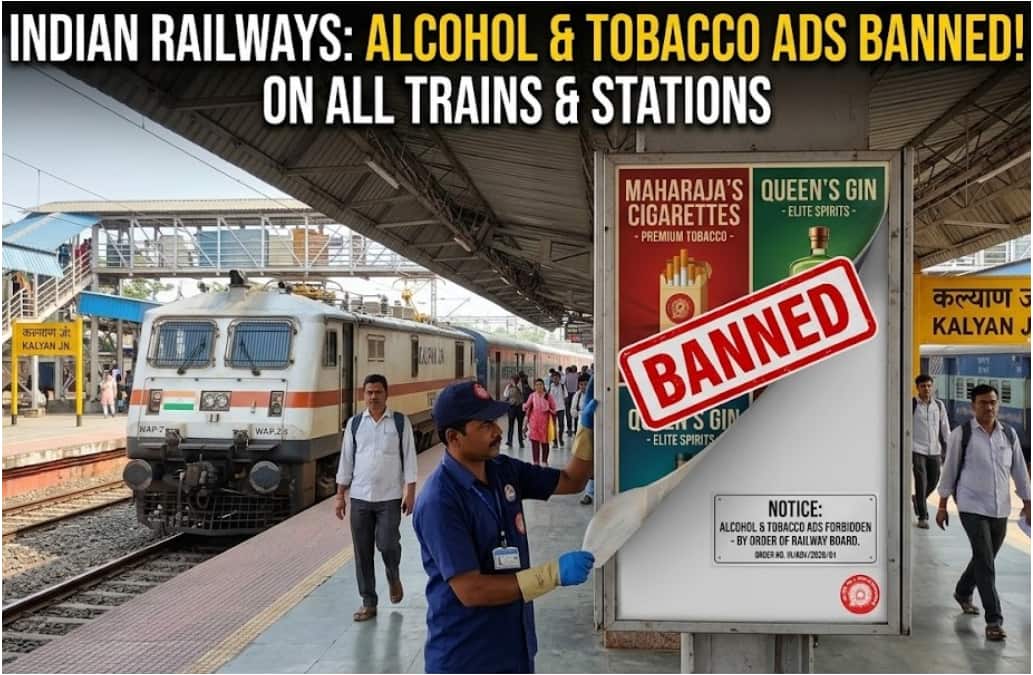
By Indian Railways has recently made a very important decision about the advertisements that people see while traveling. From now on, the railway department will not allow any advertisements related to alcohol or tobacco products. This new rule applies to all train coaches and every railway station across the country. The main goal of this decision is to make sure that the environment inside the trains and at the stations stays clean and healthy for all types of passengers. Many families and children travel by train every single day, and the government wants to protect them from seeing products that are harmful to health.
The official news came out recently and it clearly lists several things that are now banned from being shown in public railway spaces. Along with alcohol and tobacco, the Indian Railways has also decided to ban advertisements for erotic materials or any content that is not suitable for children. They want the railway journey to feel safe and respectful for everyone. This means that companies that sell cigarettes or liquor can no longer put their posters on the walls of the stations or on the sides of the train cars. This is a big change because these companies often spend a lot of money to show their products to the millions of people who use the railway every day.
Another interesting part of this new rule is the ban on advertisements for accident insurance. You might think that insurance is a good thing, but the railway department feels differently about how it is shown. They believe that seeing ads for accident insurance while waiting for a train might make passengers feel scared or nervous about their safety. The railway wants people to feel happy and relaxed during their trip. By removing these types of ads, they hope to create a more positive atmosphere. The railway board wants to focus on showing ads that are helpful or informative rather than things that might cause worry or bad habits.
This new policy also talks about how the railway will earn money in the future. Usually, the Indian Railways earns a lot of money by selling space for advertisements to different companies. This money helps pay for better seats, cleaner toilets, and faster trains. By banning these popular products like tobacco and alcohol, the railways might lose some money at first. However, the officials believe that the social message is more important than the money. They want to show that the government cares about the health of the citizens. They are now looking for other types of businesses to fill those empty spaces, such as technology companies, food brands, and travel agencies.
The government is also being very careful about how religion and politics are shown. The new guidelines say that advertisements should not hurt the feelings of any religious group or promote specific political messages that could cause trouble. The railway is a place where people from all different backgrounds come together to travel. Because of this, the environment should remain neutral and friendly for everyone. If a company tries to put up a banned advertisement, the railway authorities will take it down immediately and the company might have to pay a fine.
Overall, this change is being welcomed by many people who travel with their families. Parents feel better knowing that their children will not see large posters for unhealthy habits while waiting on the platform. Even though it is a big change for the advertising world, it is a positive step for the health and safety of the public. Indian Railways is working hard to modernize its services, and keeping the stations free from harmful advertisements is part of that mission. Everyone is waiting to see how the new look of the stations will change the experience of traveling by train in India.
Indian Railways has banned advertisements related to alcohol, tobacco, and inappropriate content across trains and stations to promote a healthier and family-friendly environment. The policy also restricts ads that may create fear, such as accident insurance promotions. This move prioritizes passenger well-being over revenue and aims to create a safe, neutral, and positive travel experience.