

 By
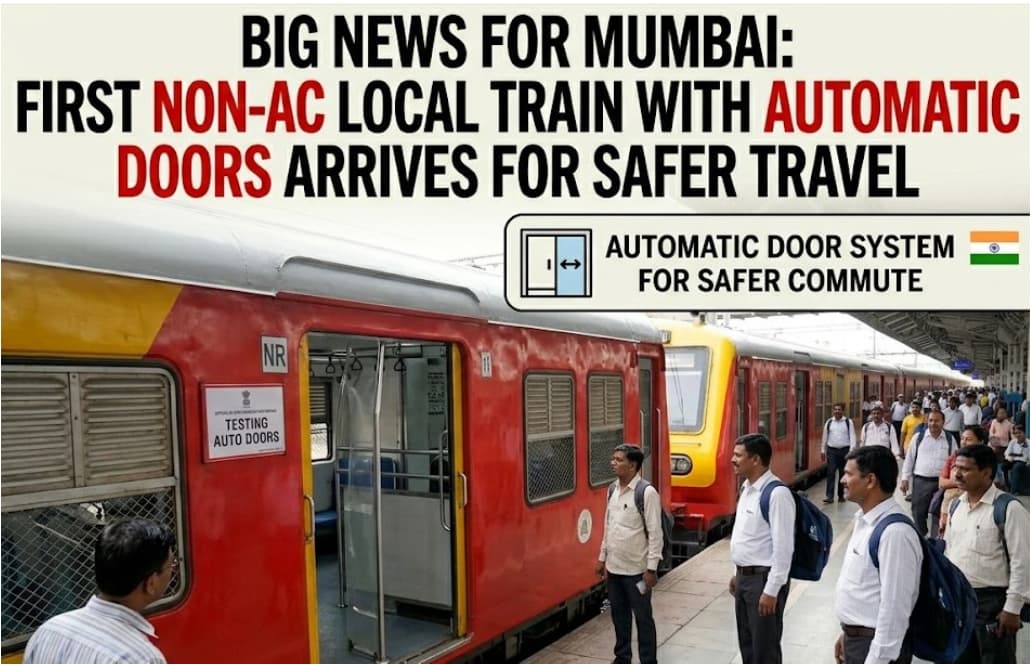
By There is wonderful news for all the daily train travellers in Mumbai. The city has just received its very first non-air-conditioned local train that comes with automatic closing doors. This is a huge change for the famous Mumbai suburban railway system. Millions of people use these local trains every single day to go to work, visit family, or travel to school. Until now, the non-AC trains always travelled with their doors wide open. This new train is a very special pilot project for the whole country of India. It marks a big step forward in making public travel much safer and more comfortable for everyone.
The main reason for building this new train is passenger safety. As many people know, the local trains in Mumbai become heavily crowded during the morning and evening rush hours. Because the train cars are so full, many passengers are forced to stand right next to the open doors. Sometimes, they even hang outside the fast-moving train. Sadly, this dangerous situation causes many bad accidents. Last year, a tragic accident happened near a station called Mumbra. A few people lost their lives after falling from a heavily crowded train. After this very sad event, the government and the railway officials decided they must fix the system. They ordered that all new trains must have doors that close automatically to protect the citizens.
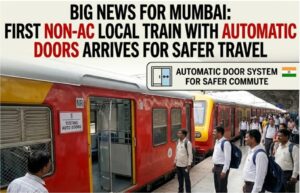
This brand new twelve-coach train was beautifully built at a special factory located in Chennai. After a long journey across the country, it finally arrived at the Kurla car shed in Mumbai. However, regular passengers cannot travel on it right away. Before people can step inside, the train must pass many strict tests. The railway engineers will drive the train at high speeds to check its balance. They will put heavy weights inside to pretend the train is completely full of people. They will also test the new automatic doors many times to ensure they open and close perfectly. Only after passing all these safety checks will the train start its regular daily service.
Along with the safe doors, the engineers added many great new features to make the journey better. The windows on this new train are much wider than the old windows. This allows more natural light to enter the passenger compartments. The seats are arranged to give people extra space for their legs. If you are travelling with heavy bags, you will be happy to know that the luggage rooms are now twice as big. Another exciting change is the open layout inside. Passengers can now walk easily from one coach to another without stepping out of the train. The train still has separate sections for ladies, first-class passengers, and people with disabilities to ensure everyone travels safely.
Many daily commuters worried about breathing inside a closed train without air conditioning. They feared the coaches would become too hot and stuffy during the hot summer months. The railway officials solved this problem very cleverly. They installed highly powerful fans on the roof of the train. These strong fans constantly pull fresh air from outside and push it down into the coaches. In addition to these fans, the glass doors and windows have special small openings that let air flow through naturally. The clever design even prevents rainwater from coming inside during the heavy monsoon season.
This beautiful new train is a major victory for the city. The government has clearly stated that all future non-AC local trains built for Mumbai will have these safe closed doors. Changing the old open-door system will take some time, but this first train brings a lot of hope. Very soon, Mumbaikars will be able to enjoy a relaxing, safe, and fresh ride across the city. Everyone is eagerly waiting for the testing days to finish so they can take their very first trip on this modern train.
Mumbai’s suburban rail network has introduced its first non-AC local train with automatic doors, marking a major step in passenger safety. Built as a pilot project, the train includes improved ventilation, wider windows, and better interiors. Developed after safety concerns and past accidents, the train will undergo rigorous testing before entering service, with plans to make automatic doors standard in future non-AC trains.