

 By
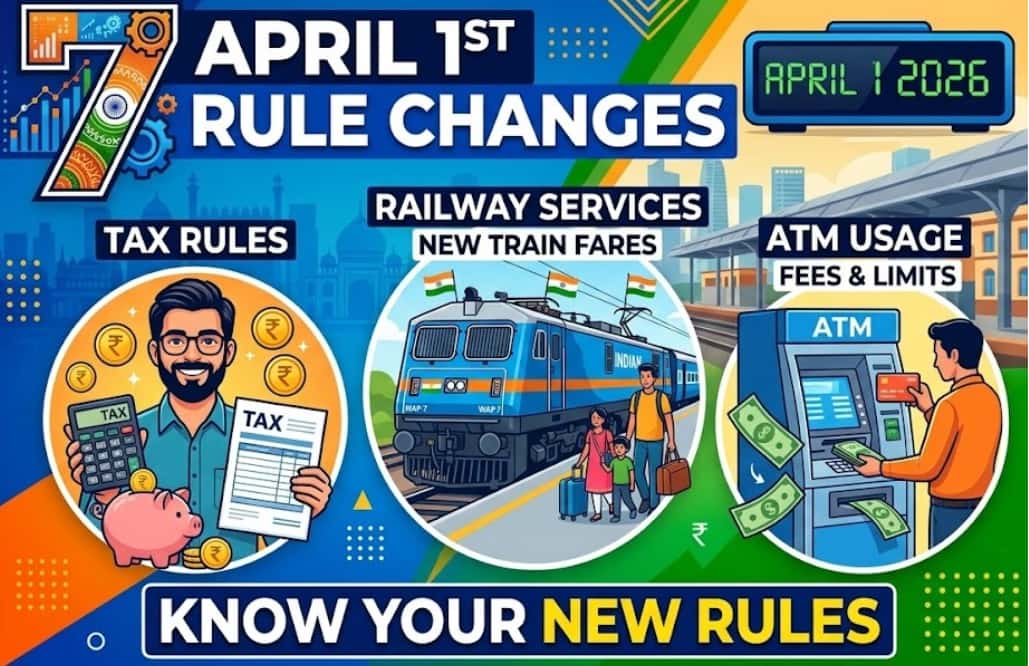
By A new financial year has started in India on the first of April, two thousand twenty six. With this new year, the government has brought some very important changes to the rules we use every day. These new rules will affect how we travel, how we pay our taxes, and how we take out cash from the bank. There are seven major changes in total. It is very useful for every citizen to know about these changes so they can manage their money better and avoid any trouble.
One of the biggest changes is for people who travel by train. The Indian Railways has made new rules for canceling tickets. If you have a confirmed ticket and you want your money back, you must cancel it at least eight hours before the train leaves. Before this rule, you could cancel it just four hours before. This new rule is made to stop people from canceling at the very last minute. It will help other waiting passengers get seats more easily. Another good news for train travelers is that they can now change their boarding station up to thirty minutes before the journey starts. This gives travelers much more freedom.

If you drive a car on the highway, there is an important update for you too. Paying cash at toll booths is no longer allowed. Everything is completely digital now. You must use FASTag, a UPI app, or scan a QR code to pay the toll tax. If you try to use cash, you might have to pay a fine or even double the toll amount. Also, the yearly fee for the FASTag pass has increased slightly. The government has done this to make highway travel faster and to remove long lines of cars at the toll plazas.
Taking out cash from an ATM has also seen a new update. Many people nowadays use their phone and UPI apps to take out cash from an ATM without using a plastic card. The banks have decided that these cardless UPI withdrawals will now be counted in your monthly free limit. Once you cross your free limit, the bank will charge you a fee for every extra withdrawal, even if you use UPI. So, people need to be more careful about how many times they go to the ATM in a month.
To make online payments safer, the Reserve Bank of India has added a new security step. Every time you make a digital payment, you will need two proofs to show it is really you. You might need to enter an OTP and a PIN, or use your fingerprint or face scan. This extra step will strongly protect your bank account from online thieves and frauds. In another identity security update, applying for a PAN card might now require extra documents like a voter ID or driving license along with the Aadhaar card. The name on both cards must match exactly.
Finally, there is a big change in the income tax system. The government has made the tax rules much simpler. The confusing words like financial year and assessment year are now merged into one single word called tax year. This will make it very easy for normal people to understand their taxes. Also, the last date to file certain tax returns for small businesses has been extended to the end of August. These seven changes show that the country is moving toward a more digital and secure future. People should understand these rules well to keep their daily life running smoothly.
Starting April 1, 2026, India introduced key rule changes affecting daily life. Indian Railways updated ticket cancellation timings and boarding flexibility. Digital toll payments are now mandatory, while ATM withdrawals via UPI count toward free limits. Enhanced security measures for online payments and PAN applications have been introduced. Additionally, income tax rules are simplified with the new “tax year” concept and extended filing deadlines for small businesses.