
 By
By Indian Railways is one of the largest train networks in the whole world. Every day, millions of people travel safely because of strict rules. Recently, the top authority of the trains, called the Railway Board, found a very big problem. They noticed that some important safety rules were not being followed at train stations. Because of this, the Railway Board issued a strong warning to all its offices across the country. They want to make sure that every single passenger and worker stays completely safe.
The main problem is about a special machine used on the train tracks. This machine is called a wheel-sensing machine or an axle counter. Its job is very important. It tells the station staff if a train is currently standing on a track or if the track is completely empty. However, like all machines, it can sometimes have a technical fault. Sometimes the machine makes a mistake and shows that a track has a train on it, even when the track is totally empty. When this happens, there is a very clear rule about what to do next to keep everything safe.
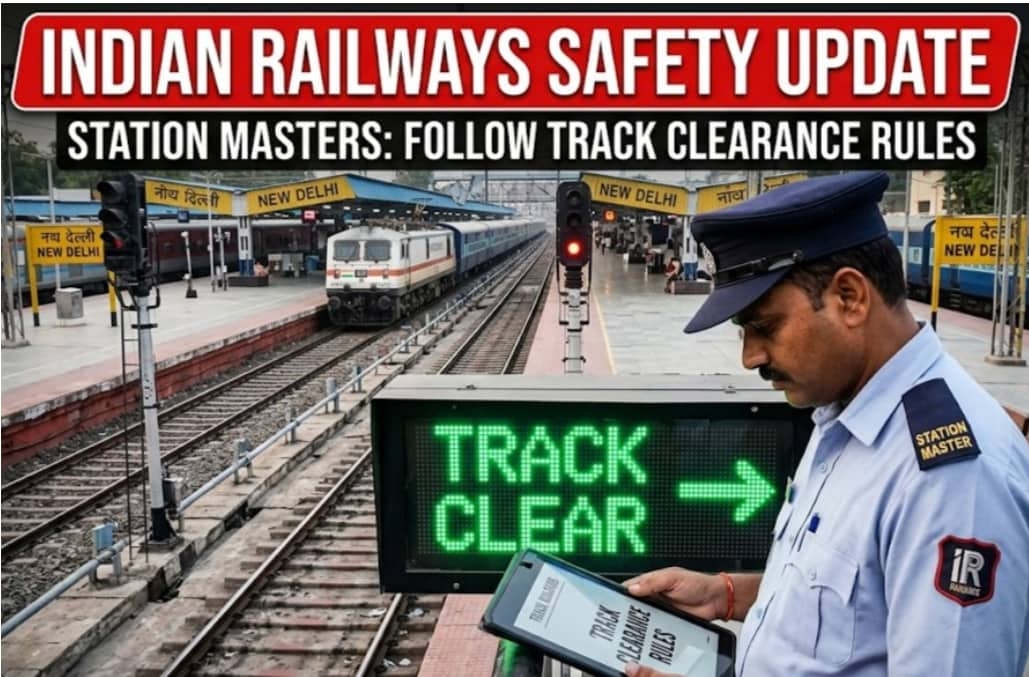
According to the safety rules, when the machine makes this mistake, only the station master or the assistant station master must handle the situation. They must personally check the track with their own eyes or use the correct tools to make sure no train is there. Only after they are completely sure the track is empty, they are allowed to reset the machine. Resetting the machine means telling the system that the track is clear so another train can enter. This is a very big responsibility because a mistake here can cause a terrible accident.
The Railway Board discovered that some station masters were not doing this important job. Instead of checking the track themselves, they were just talking to the signal staff or engineers. They would verbally tell the signal workers to reset the machine. The signal workers would listen to their boss and reset the machine without knowing if the track was really empty. The Railway Board said this is very dangerous. If the machine is reset when a train is actually on the track, a second train could crash into it. This puts many lives in danger.
To stop this from happening, the Railway Board sent a very strict message to all the general managers of the railway zones. The message said that nobody else is allowed to reset the machine. Only the assistant station masters on duty can press the reset button. They must follow all the correct steps before they do this. The board also reminded everyone about exactly how to check the track safely.
The Railway Board explained two different situations. First, if the machine breaks down inside the station area, the assistant station master must check a special box near the track. This box gives live information about whether the track is empty or not. Second, if the machine breaks down on the track between two different stations, the process is different. In this case, the assistant station masters of both stations must talk to each communication device. They must work together to confirm that no train is moving on that piece of track.
The workers who fix the signals are very happy about this new warning. They have a group called the Indian Railways Signal and Telecom Maintainers Union. The leader of this group said this is a huge relief for them. In the past, when station masters made a mistake and forced signal workers to reset the machine without checking, the signal workers got into big trouble. Recently, two signal workers even lost their jobs in a city called Visakhapatnam because of a mistake like this. Now, because the Railway Board has made the rule very clear, the signal staff will be safe from unfair punishment. This clear rule will help everyone do their jobs correctly and make train travel much safer for all passengers.
Indian Railways has issued strict safety instructions mandating that only station masters personally verify track clearance before resetting axle counters. The Railway Board found violations where signal staff were instructed to reset systems without proper checks, risking accidents. The new directive reinforces accountability, standard procedures, and coordination between stations to ensure passenger safety and prevent operational errors.